Statement of Shan communities in support of international legal action against Burma’s military
December 9, 2019
We, the undersigned Shan communities, strongly support the international legal cases being brought against Burma’s military leaders, who have authorized atrocities against the country’s ethnic peoples for decades with impunity.
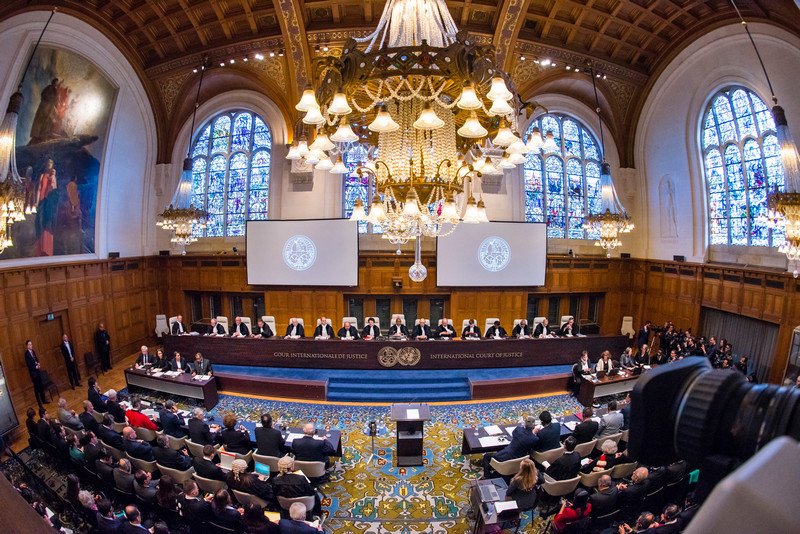
Cases proceeding under international justice mechanisms include the genocide case against Burma at the International Court of Justice (ICJ); the International Criminal Court (ICC)’s investigation into the crime of deportation against the Rohingya; and the case filed in Argentina for atrocity crimes against the Rohingya under universal jurisdiction.
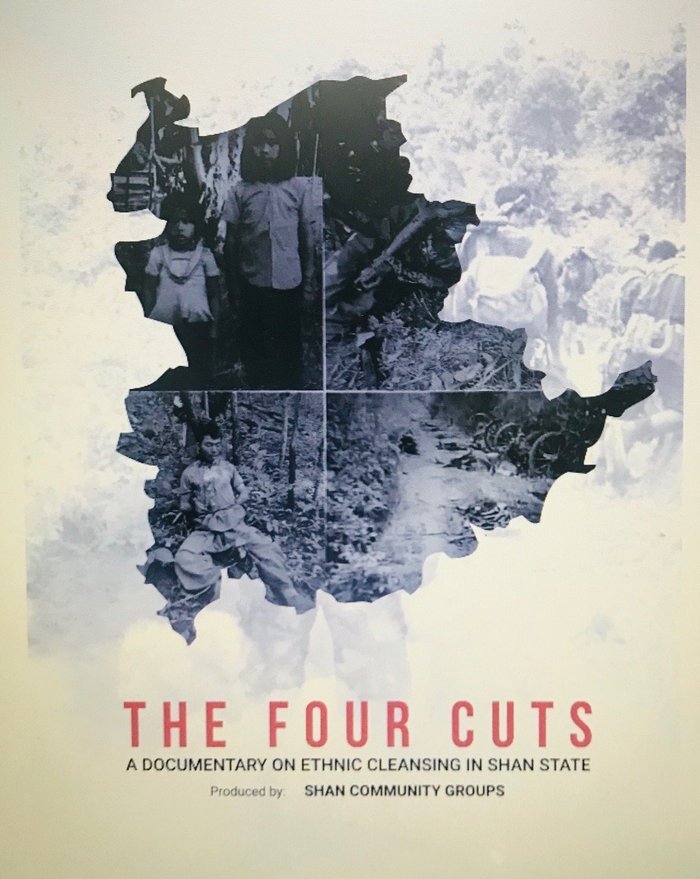
The people of Shan State have suffered a similar pattern of systematic atrocities to the Rohingya for decades, particularly during the Burma’s Army’s scorched earth campaign of 1996-1998, when over 300,000 people in 1,400 villages in central and southern Shan State were forced at gunpoint from their homes – most fled to Thailand, and are unable to return till today. Hundreds of villagers were massacred, and many tortured, including Buddhist monks.
Rape was also clearly used as a weapon of war. The 2002 report “License to Rape: The Burmese military regime’s use of sexual violence in the ongoing war in Shan State,” documented cases of sexual violence by the Burma Army against 625 women and girls during 1996-2001. The rapes were committed by soldiers from 52 different battalions; 83% were committed by officers, often in front of their own troops. 61% were gang rapes. In some cases, women were detained and gang-raped repeatedly for periods of up to four months. The rapes involved extreme brutality and often torture, including beating, mutilation and suffocation. 25% of the rapes resulted in death. In all except one case, the perpetrators enjoyed complete impunity. Villagers were even forced to sign denials that the Burma Army had committed rape.
The recent UN Independent International Fact Finding Mission has documented that Burma Army atrocities are continuing in Shan State. Until military impunity ends, systematic atrocities against ethnic peoples will continue. We are therefore heartened that the international spotlight is finally shining squarely on these horrors, and the wheels are turning to hold Burma’s military leaders to account.
This must be a wake-up call to international investors in Burma. “Business as usual” means subsidizing state-sanctioned atrocities in ethnic areas, and is untenable.
We urge concerted international pressure, including economic sanctions, on Burma, so that the Burma Army will stop its offensives and atrocities throughout the country, and begin genuine political dialogue to end the civil war and bring long-awaited justice and equality for all peoples of Burma.
Shan Human Rights Foundation
Shan State Refugee Committee (Thai border)
Kong Moong Murng IDP Camp Committee
Loi Tai Laeng IDP Camp Committee
Loi Lam IDP Camp Committee
Koung Jor Refugee Camp Committee
Loi Sam Sip IDP Camp Committee
Loi Kaw Wan IDP Camp Committee
Shan State Farmers’ Network
Lin Mork Mai
Shan National Organization (Thailand)
Toom Toan Tai
Hom Heng Jai Tai Bangkok
Overseas Shan Europe
Shan in Australia
Shan Refugee Organization (Malaysia)
Yawnghwe Office in Exile
Contact:
Sai Leng +66 86-188-9827
Nang Charm Tong +66 81-603-6655
Sai Hor Hseng +66 94-728-6696
Download PDF Files: